

Keyboard liberation

Clinicians should work by speaking, not typing

Robi Care captures the consultation as speech and prepares a structured note from it — so the clinician's attention stays on the patient, and the keyboard stops standing between them.

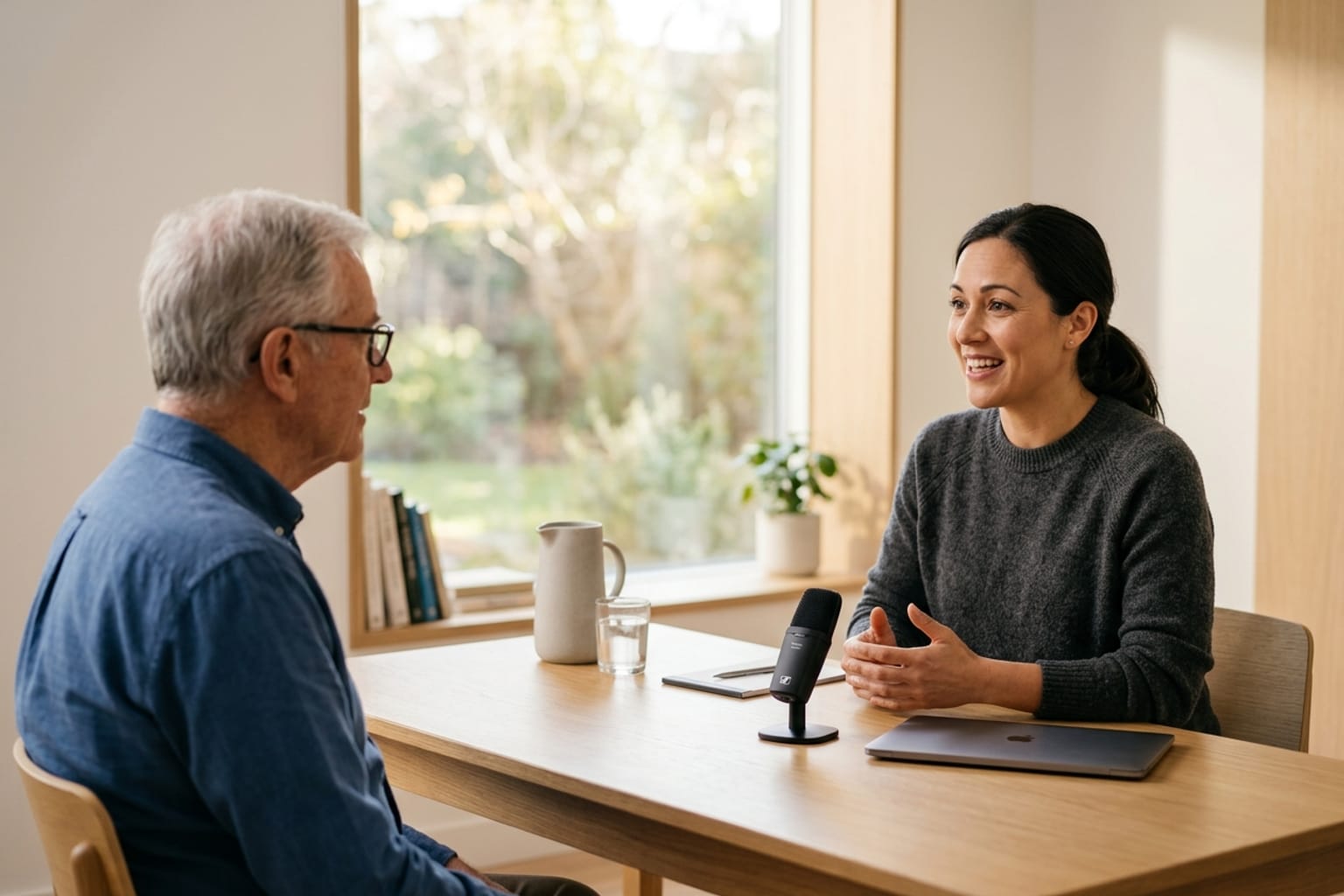
A clinician speaking with a patient across a light oak desk in a bright consultation room, with a small microphone resting beside a closed laptop.
The consultation stays a conversation. Capture happens in the background while the clinician remains present with the patient.

Keyboard liberation

Let clinicians face patients again.

Clinical documentation is indispensable, but the keyboard should not stand between a healthcare professional and the person seeking care. Robi Care uses consent-based, AI-assisted, multilingual voice documentation to transform authorized clinical conversations into reviewable drafts, summaries and structured records — just speak to it in your own language. The clinician remains responsible for verifying, correcting and approving the resulting clinical documentation — this human sign-off is a safety control, not an inconvenience.

A doctor in a white coat sitting face-to-face with an older patient in a bright, plant-filled room, listening attentively with no laptop or keyboard between them.
A consultation without a keyboard in the room: the clinician's attention stays with the person seeking care.

TMU-KL service

TMU-KL Keyboard Liberation Service

A speech-driven documentation service built with Toronto Metropolitan University's Knowledge Lab. Watch the walkthrough, then see what it changes for the clinician in the room.

The walkthrough plays inline on this page. Nothing is loaded from YouTube until you press play.

What it changes

Four gains for the clinician

  • Capture by speaking

    Patient encounter details are captured naturally through speech instead of typing, so the clinician stays in the conversation.

  • Structure automatically

    The captured encounter is automatically structured and organised into clinical documentation that follows the clinic's template.

  • Draft the follow-up work

    Draft notes, orders, and follow-up scheduling are prepared for clinician review, ready to be checked rather than written from scratch.

  • Less administration

    Administrative burden drops, so clinicians spend more of their time with patients and less of it at a keyboard.

AI may assist. The clinician decides.

The service assists with documentation and drafting only. It does not diagnose, prescribe, or act. A qualified clinician reviews and approves all clinical content before it is used, and nothing generated reaches the patient record without that sign-off.

The workflow

Seven steps from consent to authorized record

Each step is governed and reviewable. The clinician approves or corrects the draft before anything becomes part of the record.

  1. Patient Consent
  2. Clinical Encounter
  3. Secure Transcription
  4. Structured Draft
  5. Clinician Review
  6. Approve or Correct
  7. Authorized Record

This approach reflects the broader case made by Dr. Eric Topol for AI-assisted, ambient clinical documentation that frees physicians to focus on patients rather than data entry. Robi Care applies this thinking within a governed, consent-based workflow. This page does not imply that Dr. Topol endorses Robi Care.

The problem

Documentation has quietly become the second job

Clinical time is finite. When a keyboard sits between the clinician and the patient, both the conversation and the record pay for it.

Before

Keyboard-bound documentation

  • Eyes on the screenThe clinician types while the patient talks, splitting attention between the person in the room and the form on the display.
  • Notes written after the factDocumentation is reconstructed from memory at the end of the day, when the detail of the conversation has already faded.
  • Repetitive strainHours of keyboard work accumulate into wrist, neck, and shoulder strain that follows the clinician out of the room.
  • Inconsistent structureEvery clinician formats notes differently, so the record is hard to scan and harder to hand over.

After

Speech-driven documentation

  • Eyes on the patientThe consultation stays a conversation. Speech is captured in the background while the clinician remains present.
  • Notes drafted in the momentThe conversation is turned into a structured draft while the detail is still fresh, ready for review before the next patient.
  • Voice instead of keystrokesThe keyboard stops being the bottleneck. Clinicians work by speaking, the way they already work with patients.
  • One consistent structureEvery note follows the same reviewed template, so records are predictable to read and straightforward to hand over.

How it works

From spoken consultation to reviewed note

Four steps, in the order a clinician already works. Capture and structure are automatic; review and record stay with the clinician.

  1. Step 1

    Capture

    With the patient's knowledge, the consultation is captured as speech. No typing, no screen between clinician and patient.

  2. Step 2

    Structure

    The captured conversation is organised into a structured clinical note — history, findings, plan — following the clinic's template.

  3. Step 3

    Review

    The clinician reads the draft, corrects anything that needs correcting, and approves it. Nothing is filed before that review.

  4. Step 4

    Record

    Only the approved note is committed to the record, with the clinician's decision recorded alongside it.

Proof points

What changes when the keyboard steps aside

The gains are practical rather than dramatic: more attention in the room, a note that is already drafted, and a record that reads the same way every time.

Hands free
Documentation without a keyboardThe clinician's hands and attention stay with the patient rather than the input device.
Review first
Every note approved before useGenerated output is a draft until a clinician reads and approves it. The clinician remains the decision-maker.
One template
Consistent structure across the clinicNotes follow the same reviewed layout, which makes handover and audit straightforward.
A clinician in a white coat walking mid-stride down a bright hospital corridor, dictating notes into a handheld tablet, with pale green walls and daylight from tall windows behind.
Speech-driven capture is a workflow change, not a new way of practising medicine — the clinician still leads the consultation.

Get started

Give your clinicians their attention back

See how speech-driven capture and review-before-use documentation fit the way your clinic already works.